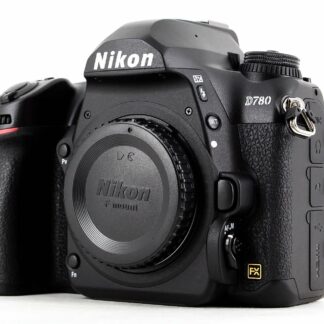
Thinking of buying a Nikon D750 in 2025? Discover whether this full-frame DSLR still offers great value or if it’s outdated gear. We cover image quality, performance, lens compatibility, and who it’s best for.
Buying a Nikon D750 in 2025: A Full-Frame Bargain or Outdated Gear?
In the ever-evolving world of digital photography, where new mirrorless systems seem to launch every year, the Nikon D750 still manages to hold a significant place in photographers’ conversations—even a decade after its release. But is buying a Nikon D750 in 2025 a wise decision or a step backward? Let’s explore whether this full-frame DSLR still holds its own or has finally aged out of relevance.
Why the Nikon D750 Still Draws Attention
Released in 2014, the D750 was positioned as a mid-range full-frame DSLR aimed at both enthusiasts and professionals. It offered impressive features for its time: a 24.3MP full-frame sensor, a 51-point autofocus system, 6.5 fps continuous shooting, dual SD card slots, and built-in Wi-Fi. Its robust magnesium alloy and carbon-fiber body gave it both strength and a relatively light weight compared to other pro DSLRs.
Even today in 2025, the D750 is widely respected for its balance between performance, image quality, and cost—especially in the used market. But that doesn’t mean it’s the right choice for everyone.
Image Quality: Still Competitive?
The 24.3MP sensor of the D750 continues to deliver sharp, detailed images with excellent dynamic range and low-light performance. While newer cameras may offer more megapixels, that doesn’t necessarily equate to better real-world performance for most users.
In fact, for portrait, wedding, and landscape photographers who don’t need ultra-high resolution, the D750 remains an ideal tool. Its files are manageable in size yet rich in detail, and the colors are typically Nikon—pleasing and natural.
Autofocus and Speed
The D750’s 51-point autofocus system, borrowed in part from the D810, performs reliably in most scenarios. It’s fast and accurate, though it may not match the ultra-sophisticated systems found in modern mirrorless cameras like the Nikon Z8 or Sony A7R V. However, for still photography—including sports and wildlife—the D750 is still a capable performer, especially when paired with fast lenses.
It shoots at 6.5 fps, which might seem slow by today’s standards, but it’s more than enough for most types of photography. Only high-end sports or wildlife shooters might feel limited.
Ergonomics and Handling
One of the D750’s strongest suits is its excellent ergonomics. Nikon DSLRs have long been praised for their comfortable grip, logical button layout, and intuitive menu systems. The D750 is no exception.
It also features a tilting LCD screen—something uncommon for DSLRs of its era—which makes it easier for high or low angle shots. Although it’s not a touchscreen, the tilting feature alone adds versatility.
Video Capabilities
This is where the D750 begins to show its age. It maxes out at 1080p 60fps video, which is increasingly outdated in a 4K and even 8K era. While the image quality is still good, video shooters may find it lacking in resolution, codecs, and modern video-centric features like focus peaking, zebras, and log profiles.
If your needs lean more toward vlogging or cinematic work, a newer mirrorless body would be a better investment.
Lens Compatibility
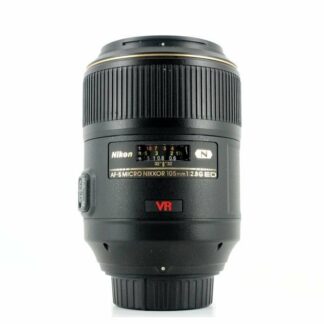
The Nikon D750 uses the F-mount, meaning it has access to decades’ worth of quality Nikkor glass—both new and old. There are countless affordable used lenses available that pair beautifully with the D750, giving budget-conscious photographers a powerful and cost-effective system.
While Nikon has shifted its attention to the mirrorless Z-mount, F-mount lenses remain widely available and supported. For some, this legacy compatibility is a major reason to choose the D750.
Battery Life and Reliability
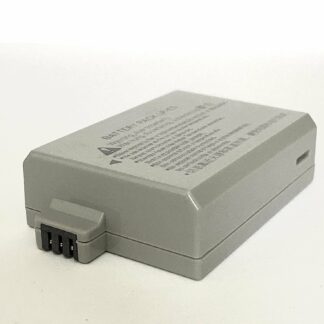
DSLRs continue to dominate mirrorless cameras when it comes to battery life. The EN-EL15 battery in the D750 can easily shoot over 1,000 shots on a single charge—ideal for events, weddings, and long shoots without worrying about swapping batteries constantly.
Moreover, the D750 has proven itself to be a reliable workhorse. Its weather-sealed body and durable shutter (rated for 150,000 actuations) mean it’s built to last, even in challenging environments.
Current Market Prices
As of 2025, you can find a used Nikon D750 body in good condition for anywhere between $500 to $750 USD, depending on shutter count, cosmetic wear, and included accessories. This is a significant drop from its original $2,300 launch price, making it an outstanding value for full-frame image quality.
If you’re a hobbyist or an aspiring pro on a budget, the D750 offers a huge leap in quality from APS-C or entry-level gear without the high costs associated with new mirrorless systems.
Who Should Still Consider the D750 in 2025?
✅ Event Photographers: Weddings, parties, and corporate events often don’t require cutting-edge specs but do demand reliability and good low-light performance. The D750 delivers both.
✅ Portrait Shooters: Pair it with an 85mm f/1.8 or 70-200mm f/2.8 and you’ve got a budget-friendly portrait powerhouse.
✅ Budget-Conscious Enthusiasts: If you’re upgrading from crop-sensor DSLRs like the D5300 or Canon Rebel series, the D750 will feel like a huge step up.
✅ Photographers Who Prefer Optical Viewfinders: For those who aren’t ready to give up an OVF for EVF, the D750 offers a satisfying shooting experience.
Who Might Want to Pass?
❌ Video-Centric Creators: Limited to 1080p video and lacking modern video tools, the D750 isn’t ideal for serious videography.
❌ Mirrorless Enthusiasts: If you’re already invested in mirrorless gear or want features like eye-detection AF, silent shutter, or 4K video, a Z-series or Sony Alpha body may be more suitable.
❌ Future-Proofing Buyers: If you want a system that will receive updates, native lens releases, and broader third-party support moving forward, mirrorless is where the industry is headed.
Final Verdict: A Full-Frame Bargain with Caveats
The Nikon D750 in 2025 represents a sweet spot in the used gear market. For less than $750, you get full-frame performance, great ergonomics, excellent stills quality, and a vast lens ecosystem. It may not be flashy or future-proof, but for many photographers—especially those focused on still images—it’s still a worthy companion.
If your needs are basic to intermediate and your budget is tight, the D750 is one of the best full-frame cameras you can buy used today. Just go in with realistic expectations and you may be surprised how well this DSLR classic holds up.