Posted on

Street Photography on a Budget: Top Used Lenses to Try

Discover the best budget-friendly used lenses for street photography. Explore affordable Canon, Nikon, Sony, Fujifilm, and vintage lens options that deliver sharp images and stunning street captures.

Street Photography on a Budget: Top Used Lenses to Try

Street photography is all about capturing candid moments, vibrant city life, and the unique stories unfolding around us every day. Unlike studio or landscape photography, street photography often demands a compact, discreet, and lightweight setup that allows photographers to blend into their environment. But here’s the challenge: camera gear can be expensive, especially high-quality lenses.

The good news is you don’t need to buy brand-new gear to excel at street photography. The used lens market is a treasure trove of affordable, high-performance lenses perfect for shooting in urban environments. In fact, some older lenses are better suited to street photography because of their compact size and character-rich rendering.

In this article, we’ll explore the best used lenses for street photography that deliver exceptional results without draining your wallet.


Why Buy Used Lenses for Street Photography?

  • Affordability: You can save 30–50% compared to buying new, giving you access to higher-quality optics.
  • Character Over Clinical Perfection: Older lenses often have unique rendering, flares, and micro-contrast that enhance street photos with a timeless feel.
  • Compact and Lightweight Designs: Many older lenses are smaller and lighter, making them less intrusive for candid street work.
  • Manual Focus Mastery: Many vintage lenses encourage a slower, more deliberate shooting style, perfect for honing your composition and focus skills.

What to Look for in a Street Photography Lens

When choosing a lens for street photography, especially on a budget, consider:

  • Focal Length: 35mm and 50mm are classic choices for their natural perspective.
  • Aperture: A fast aperture (f/1.8 to f/2.8) helps in low light and allows for subject isolation.
  • Size & Weight: Compact, lightweight lenses are easier to carry and draw less attention.
  • Autofocus or Manual Focus: Both can work; manual focus lenses can slow you down for more thoughtful compositions.

Top Used Lenses for Street Photography

1. Canon EF 50mm f/1.8 STM (“Nifty Fifty”)

  • Mount: Canon EF (Full-frame & APS-C)
  • Why it’s great: Sharp, fast, and ultra-affordable. This lens is a no-brainer for Canon users wanting shallow depth of field on a budget.
  • Size & Weight: Extremely compact, making it great for discreet shooting.
  • Used Price Range: $80–$120

2. Canon EF 40mm f/2.8 STM Pancake Lens

  • Mount: Canon EF
  • Why it’s great: Ultra-slim pancake design makes your DSLR almost pocketable. Its focal length sits perfectly between 35mm and 50mm.
  • Size & Weight: One of Canon’s most compact lenses.
  • Used Price Range: $100–$150

3. Nikon AF-S 35mm f/1.8G DX

  • Mount: Nikon F (DX-format APS-C)
  • Why it’s great: Equivalent to a 52mm field of view on DX bodies, this is a sharp, fast, and affordable lens ideal for Nikon shooters.
  • Size & Weight: Compact and unobtrusive for street use.
  • Used Price Range: $120–$160

4. Nikon AF 50mm f/1.8D

  • Mount: Nikon F (Full-frame & APS-C)
  • Why it’s great: A lightweight, fast prime with classic rendering. On full-frame bodies, it delivers that traditional 50mm “street” perspective.
  • Used Price Range: $100–$150

5. Sony E 35mm f/1.8 OSS (APS-C)

  • Mount: Sony E (APS-C)
  • Why it’s great: With Optical SteadyShot (OSS) and a fast aperture, this lens is a compact workhorse for Sony mirrorless users.
  • Size & Weight: Small and light, great for discreet shooting.
  • Used Price Range: $250–$350

6. Sony FE 50mm f/1.8

  • Mount: Sony E (Full-frame & APS-C)
  • Why it’s great: Affordable full-frame 50mm prime lens with good bokeh and portability.
  • Used Price Range: $150–$200

7. Fujifilm XF 35mm f/2 R WR (“Fujicron”)

  • Mount: Fujifilm X (APS-C)
  • Why it’s great: Weather-sealed, razor-sharp, and compact. Equivalent to 53mm in full-frame terms, it’s perfect for Fujifilm street shooters.
  • Size & Weight: Lightweight and discreet.
  • Used Price Range: $250–$350

8. Fujifilm XF 27mm f/2.8 Pancake Lens

  • Mount: Fujifilm X (APS-C)
  • Why it’s great: Equivalent to a 41mm field of view, this pancake lens is ultra-slim, making your Fujifilm body feel like a compact camera.
  • Used Price Range: $200–$250

9. Sigma 30mm f/1.4 DC DN Contemporary (Sony/Fujifilm/Canon EF-M)

  • Mounts: Sony E, Fujifilm X, Canon EF-M
  • Why it’s great: Excellent optical quality with a fast f/1.4 aperture, perfect for low-light street scenes.
  • Used Price Range: $250–$300

10. Voigtländer Nokton Classic 40mm f/1.4 (M-mount)

  • Mount: Leica M (Adaptable to mirrorless)
  • Why it’s great: A legendary manual focus lens with a distinctive vintage rendering and creamy bokeh.
  • Used Price Range: $300–$400 (excluding adapter)

Best Vintage Lenses for Street Photography

For those willing to embrace manual focus, vintage lenses are a goldmine of character and affordability.

11. Canon FD 50mm f/1.4

  • Mount: Canon FD (Adaptable to mirrorless)
  • Why it’s great: Warm tones, smooth bokeh, and excellent build quality.
  • Used Price Range: $100–$150

12. Minolta Rokkor 45mm f/2

  • Mount: Minolta MD/MC (Adaptable to mirrorless)
  • Why it’s great: Small, sharp, and beautifully built. A hidden gem for mirrorless street shooters.
  • Used Price Range: $80–$120

13. Pentax Super-Takumar 55mm f/1.8

  • Mount: M42 (Adaptable to mirrorless)
  • Why it’s great: Known for its smooth rendering and exceptional build quality.
  • Used Price Range: $80–$120

Tips for Buying Used Street Photography Lenses

  1. Inspect Optics: Look for scratches, haze, or fungus on lens elements.
  2. Test Focus Rings and Aperture Blades: Ensure smooth rotation and clicky aperture stops.
  3. Check Mount Condition: Ensure the mount isn’t bent or excessively worn.
  4. Autofocus Speed & Accuracy: For AF lenses, make sure the motor is still responsive.
  5. Ask About Return Policies: Especially when buying online, ensure there’s a return window.

What Focal Length is Best for Street Photography?

  • 35mm: The classic street lens, offering a natural field of view with a bit of context.
  • 50mm: Ideal for subject isolation and tighter compositions.
  • 28mm: For dynamic, wide street scenes where you want to include more environment.
  • 40mm: A versatile in-between focal length, popular among rangefinder enthusiasts.

Why Compact Lenses Matter in Street Photography

In street photography, being discreet is often key to capturing genuine moments. Bulky telephoto lenses not only attract attention but can also make subjects uncomfortable. Compact primes or pancake lenses allow you to blend in, stay agile, and shoot candidly. Lightweight setups are also less tiring during long photo walks.


Conclusion

Street photography isn’t about having the latest, most expensive gear—it’s about capturing stories, emotions, and fleeting moments. By tapping into the used lens market, you can equip yourself with high-quality optics that deliver professional results on a modest budget.

From the ever-popular Canon 50mm f/1.8 to vintage gems like the Helios 44-2 or the Pentax Super-Takumar, there are countless affordable lenses that allow you to dive into street photography and develop your unique visual style. With thoughtful choices and a bit of patience, you can build a compact, powerful street photography kit that won’t break the bank.

Posted on

How to remove mouldy odour from cameras and lenses?

I recently bought a new old lens for one of my cameras on eBay. Everything is fine so far. But I don’t like that the lens has a stinking musty smell. Here you can quickly help yourself with a simple trick. I like old analogue cameras. Every now and then I look at eBay, because these devices are now often sold there at a low price. Recently I have decided to buy a wide-angle lens for my Kiev medium format camera. The lens was apparently perfectly fine too – apparently. Because it actually had a mouldy smell! This was due to the bag in which it was. Unfortunately, this must have been lying in a damp cellar for too long. I didn’t want to do anything with it, so I threw away the bag with the strong musty smell.  The smell of mold had also spread to the lens. But here you can easily help yourself.

Yes, you can easily get out the musty smell with coffee!

So I first looked for a plastic box in the kitchen that my lens would fit. I put this in there. Next, I added some instant coffee. I closed the lid and put the can and its contents down for 24 hours. After this time I opened the can and the musty smell is almost gone! The coffee had so to speak soaked up the smell of mold. The lens now smelled slightly of the instant coffee. But this quickly evaporated.

With this simple trick, it is possible to drive out the notorious musty smell from smaller objects (that have been stored incorrectly or damp). With larger objects (e.g. items of clothing) you would have to take a larger bag like a garbage bag and sprinkle a whole pack of coffee into it. The container must be closed, however – especially when working with instant coffee. Because instant coffee tends to get lumpy and sticky with a constant supply of air! You don’t want it to stick to the objects with the musty smell or leave stains.

Clean your photography equipment with some cheap perfume or aftershave

Attention! Do not pour any liquid directly on your photography equipment, because it may cause internal damage, fungus, electric hazard, etc.!

Put few drops of cheap perfume or aftershave on a microfiber cloth and wipe your equipment carefully. You can use ear buds in places that you can’t access. For inexpensive dirty equipment I often use toothbrush. Let your equipment dry. Don’t put it into a bag yet, but also don’t let it uncovered for days on a direct sunlight because it can collect dust and direct sunlight can damage your sensitive  and expansive device. Also, it can get easily scratched or damaged if you forget it on the table or on the top of your kitchen. Wait for an hour after cleaning and place it in a bag or case, if you don’t use them. It is recommended to have a few small bags of Silica gels silicon dioxide that is absorbing moisture in your camera bag. Do not keep your equipment in rooms where the humidity is high. Keep your room at a normal humidity. You can use room dehumidifier to prevent you cameras and lenses. Yet, for your own health is also important. So find the balance (If your house is above 50% humidity then a dehumidifier is needed. However, if humidity levels are below 30%, a humidifier is needed).  

Prevention – Keep your cameras and lenses dry in bad weather

  • Use umbrella
  • Waterproof camera covers
  • Use lens hoods
  • Change lenses under cover
  • Wear waterproof clothing
Posted on

The white balance

Do you know what the white balance is? But you should, because after the three exposure values ​​( exposure time , aperture , ISO ), white balance is the most important in photography. The other values ​​deal with the brightness of the picture, this deals with the color.

1 The white balance in digital cameras

2 Shoot RAW for better white balance

3 Adjust the white balance manually

4 When do I hire something?

5 The gray card

We need the white balance to compensate for the different light colors. You have probably already noticed yourself, the sunset or a lightbulb is very orange, we go into the cellar and turn on the neon tube, the light is very cold. Our brains can do that and that color difference doesn’t look that extreme.

The white balance is supposed to compensate for this and the aim of the white balance is to make white look white.

This color temperature is given in Kelvin and is very easy to remember with fire. The hotter the fire, the more bluish it becomes. Same with white balance. The hotter / higher I set the Kelvin number, the bluer the picture becomes.

The white balance in digital cameras

At the same time we had to change the camera film to change the white balance. Today a simple adjustment of the camera is sufficient. In many situations, the camera should give a good result with an automatic white balance. It automatically searches for the whitest (most color-neutral point). The camera finds this in most situations and can, if necessary, switch to the brightest point of the image if no suitable neutral point can be found. This point is then used as a reference to correct the color of the image.

Of course there are situations in which the automatic white balance just cannot work. If you photograph sophisticated subjects that do not offer neutral colors, for example, a color cast occurs. This is the case, for example, at night or with a picture that only consists of bright colors.

In all normal situations, the automatic white balance (also AWB) delivers great results. At least for normal demands. But I’ll get to that in a moment 🙂

Shoot RAW for better white balance

The RAW format offers something incredible. Because your camera does not apply color correction until after the photo has been created, we can change it in RAW format. The RAW format is a file that, uncompressed and unchanged, contains all of the information that the camera can capture. The white balance is set, but can be changed without loss in image processing with a RAW file. This does not work with a JPG (except for minimal changes).

Is RAW the solution

Isn’t the solution just to always shoot in RAW and do everything in image processing? Definitely NO. Although I have this option, I almost exclusively take photos using completely manual white balance. The pictures already look good in the camera and I can assess them directly and show them to the customer without editing them beforehand. Everyone gets a much better idea of ​​the result.

Adjust the white balance manually

Like the exposure, the white balance can of course also be set manually. I already said that the automatic does a great job, so why a manual white balance? This is especially important if you want to keep a constant visual style in a report. All images always have the same color scheme and do not change constantly because the camera is of the opinion that the color should now be 1000 K colder.

Furthermore, the coloring can be controlled much more finely. Each camera has its own color scheme. With 100 cameras, different models and manufacturers, you can set everything exactly the same (same exposure / AWB) and still get different results. This can be counteracted by manually setting the white balance. An example: If I take photos in a park at sunset and use the AWB, my pictures are significantly more yellow than with manual 5500 K. That’s why I take photos on 5500K to make the pictures look the way I would like them to. The closer I get to this result, while taking pictures, the less work I have in image processing.

When do I post something?

  1. If you are at the beginning of your photography and have not yet understood the concept, put the Karma on AWB and you will get 90% good results.
  2. As soon as you already know something better and want to experiment a little, you can apply the defaults or the completely manual value to different situations.
  3. If you want to film, you should definitely work with a manual white balance so as not to change the color in the middle of the film.
  4. If you want to get the most out of your pictures, deal with white balance in the long term and learn how to apply it to different situations.

The gray card

Now it is getting more professional, because with a gray card we offer the camera a neutral surface with which it can determine the white balance much better. We can say how the white balance should be measured and from where, and get a much more precise result.

Some write that you can have a sheet of white paper or just any white surface. I advise against that. Every surface has a specific color. The wall was painted in eggshell and not in white and it doesn’t work anymore. Who tells you that the sheet of paper is 100% white? Your own eye may even be wrong here. A gray card can help here, but the result will only be perfect with experience and you can get it by trying out 😉

Posted on

DSLR camera purchase advice

Buying DSLR: What to Look For Are you considering buying a digital single lens reflex (DSLR) camera? Are you looking for the answer for most important questions, you need comprehensive advice and reveal what to look out for when buying – from the equipment to the manufacturer?

Our DSLR buying guide will help you find the right SLR camera.

Digital single-lens reflex cameras (DSLR) deliver the best image quality of all camera types and can be used most flexibly – even if their lead over mirrorless system cameras is shrinking. That’s why more and more amateur photographers are swapping their compact cameras for a DSLR. But which DSLR model is the right one? And which one is right for you?

When buying a DSLR, you choose a system

All SLR camera manufacturers try to retain customers in the long term with inexpensive entry-level DSLRs. Because the fact is: Once you have decided on a brand, you not only buy a camera, but also commit yourself to a system – and later buy suitable lenses, flash units and accessories.

Even if photographic skills and technical requirements for the camera develop further, most photographers remain loyal to the system they have chosen, even as advanced or professional users. Accordingly, you should plan your entry into the world of digital SLR photography carefully.

What does DSLR stand for?

The abbreviation DSLR stands for Digital Single Lens Reflex. In terms of price, the cheapest and most expensive DSLR models easily differ by a factor of 10 – the differences in equipment are correspondingly large.

In this article our team has put together and answered the most important questions for you. So you are well prepared for the purchase of a DSLR camera.

What is the difference between DSLRs and other cameras?

Single-lens reflex cameras offer  two major advantages over compact cameras:

The sensors that record the image are significantly larger. This enables a considerably better image quality.

Instead of permanently installed optics, there are interchangeable lenses. In this way, the camera can be optimally adapted to every imaginable task.

The so-called bridge cameras (also known as megazoomers) play a special role. In size and appearance, they are reminiscent of a DSLR, but in fact they are classic compact cameras with a small sensor and built-in lens that covers a very large range of focal lengths from wide-angle to strong telephoto. In addition, they often offer setting options similar to those of a single lens reflex cameras.

In terms of size and weight, the mirrorless system cameras are between compact cameras and DSLRs. They are still equipped with large sensors and interchangeable lenses and are now equal to DSLRs in terms of image quality.

In general, if you don’t want to worry about camera settings when taking photos, a compact camera that makes all the important settings automatically is ideal for you. However, if you already have a basic knowledge of photography and now attach more importance to high image quality and many setting options, you cannot avoid a SLR model.

What are the advantages of DSLRs?

If it is only the image quality that counts and the purchase price only plays a subordinate role, then SLR cameras are best suited for everything, because they deliver better image quality than a compact camera in all shooting situations.

The less light is available, the greater the quality advantage the DSLR has. They score particularly well in atmospheric twilight or when taking pictures indoors without a flash unit.

A DSLR can be used flexibly thanks to interchangeable lenses (example Canon EOS-1D X Mark II with EF 400mm F2.8 lens).

In addition, DSLRs can be used universally. If you want to take photos carefree, with a suitable zoom lens and the automatic setting you can take photos as carefree as with a compact one. Conversely, thanks to the large number of different lenses and the ability to manually set all recording parameters such as sensitivity, shutter speed and aperture, you are equipped for every conceivable photographic task.

Another advantage that is often overlooked is the excellent ergonomics. The shape and weight of an SLR camera make it easy to hold and the large buttons and wheels make it easy to operate. The small compacts are often fiddly to use the buttons and difficult to hold because of the smooth (because pretty) surface. Compared to DSLRs, compact cameras are smaller, lighter and easier to use.

What are the disadvantages of DSLRs?

Of course there are also disadvantages. Size and weight score points in terms of ergonomics, but the DSLR does not fit in a jacket pocket, but is hung around the neck or carried in the hand. Neither of us does that all the time, so we miss some interesting motifs. And the purchase price of a DSLR with a few additional lenses can quickly be many times that of a compact camera.

Last but not least: Even the otherwise incredibly practical interchangeable lenses can be a disadvantage. If you don’t have the right lens with you or if you change the lens in bad weather, moisture or dirt get into the camera interior and cause problems there.

How do DSLR systems from different manufacturers differ?

Since every manufacturer cooks its own porridge, you are already determined when you start. Let’s say you start with an entry-level housing and two lenses. Then you can later buy a higher quality housing from the same manufacturer and continue to use the lenses without any problems. With a few exceptions, however, the lenses do not fit the bodies of other manufacturers.

Third-party lens manufacturers such as Sigma or Tamron offer their lenses with connections for the models of several camera manufacturers, but a lens built for Canon only fits a Canon and a lens built for Nikon only fits a Nikon.

Flash units are connected via a standardized hot shoe and look as if they can be used across systems, but they are not. Due to the complex automatic functions, you also have to replace the flash unit later when changing the system. In contrast, only simple accessories such as filters or memory cards are completely independent of the camera manufacturer.

Which DSLR systems are there? An overview:

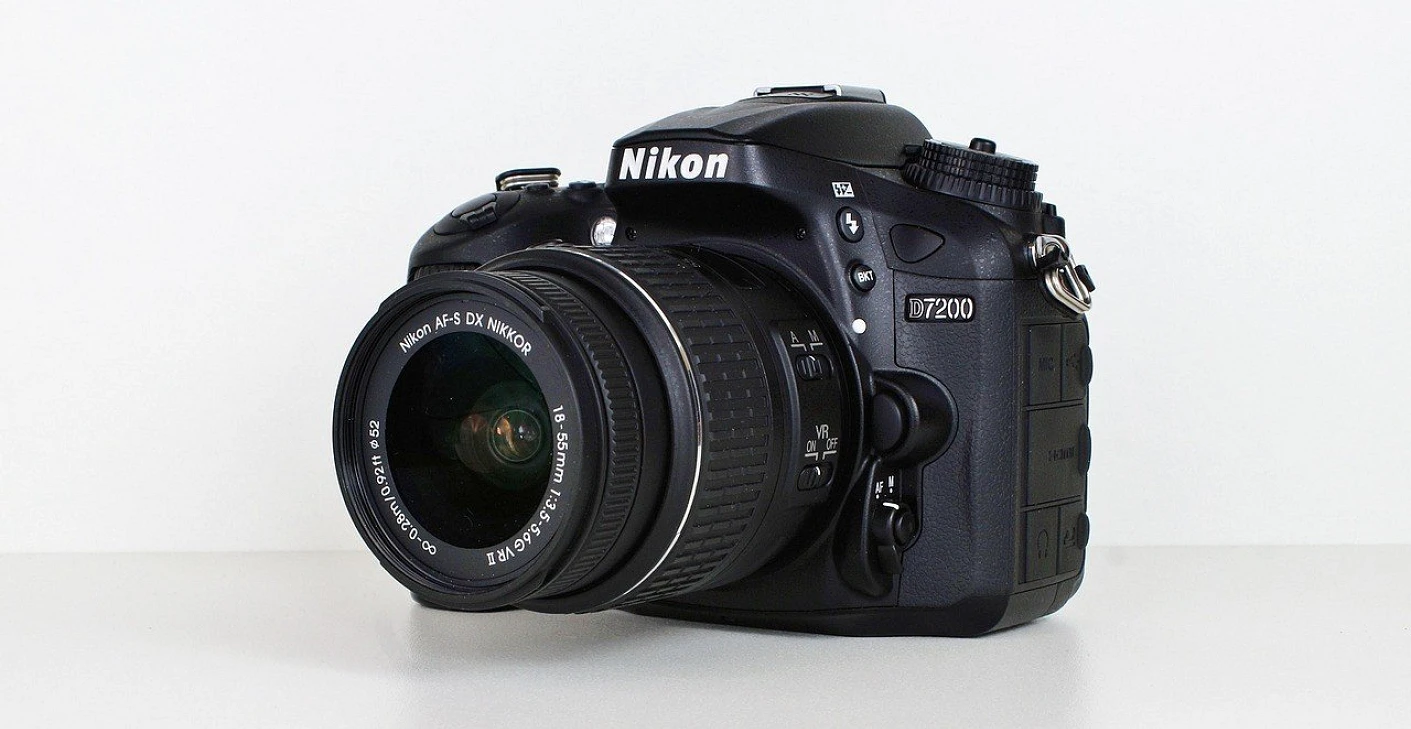
Canon and Nikon are the top dogs in the field of large DSLRs with mirrors. They have most models and cover the entire range from entry-level ( e.g. Canon EOS 1300D , Nikon D3400 ) to professional models ( e.g. Nikon D5 , Canon EOS 5DS and 5DS R ). In addition, they score with the most extensive range of lenses and accessories.

Sony has clearly caught up in terms of depth and breadth of the range in recent years and impresses with many innovations. In addition to classic DSLRs with a fixed mirror (e.g. Sony Alpha 77 II ), they developed there. This construction principle offers a number of advantages, especially when the camera is also used for video filming. However, Sony is focusing more and more on mirrorless system cameras.

Leica, Hasselblad and Pentax with their medium format models serve the professional sector – prices in the high four-digit or five-digit range ensure that. Pentax also has a number of amateur and mid-range models in various categories, from the entry-level K-S2 to the full-frame DSLR1 .

Olympus now completely relies on the more compact models without mirrors, as do Panasonic, Fujifilm and Samsung. Sony, Canon and Nikon now also have such cameras in their ranges

The best SLR cameras with APS-C sensors

Canon, Nikon, Sony and Co: In our gallery we present the currently best DSLRs with APS-C sensors.

Are there DSLRs for specific purposes?

No. The area of ​​application of a DSLR is determined much more by the lens than by the camera itself. And here too, not only the focal length range is decisive, but also the initial opening. It determines the amount of light on the sensor and the depth of field and thus makes a significant contribution to image design.

Special DSLR properties are only required in exceptional cases. This includes:

Sports photography: In addition to a bright and long-focal length telephoto lens, a fast camera is required that can also create longer series with fast image sequences while maintaining sharpness. Professional devices such as the Canon EOS 1Dx or the Nikon D5 can do this.

Video: The top models from Canon and Nikon, on the other hand, are hardly usable for good videos in HD quality. Here, mirrorless system cameras are now more than a nose’s length ahead of DSLRs. The lens must also be optimized for video and quickly adjust the focus without overshooting the target.

Outdoor: If you use the camera in places where sand, water and dirt clog it, it should be a more robust model. They can be found primarily in the professional class with steep prices, but more and more semi-professional DSLRs also offer dust and splash protection.

I still have old lenses from the analog era – is that a purchase criterion?

Some people would say “Under no circumstance!”. New manufacturing techniques make better lenses possible, which is why modern lenses are superior to any “oldie” in terms of imaging performance. If you buy a DSLR because you want to get better pictures, working with old lenses often makes no sense. However, this is not always the true. There are some old vintage lenses that have a good quality and they are most of the time chap too.

Yet, it worths to mention: Even with suitable connections within a system, not all functions are transferred from the housing to the lens and vice versa (compatibility issues). So you lose a considerable part of the automatic functions of a camera.

What trends can be observed?

Buy your DSLR when you need it. The quality has once again improved significantly in recent years and it will remain so in the future. In addition to the trend towards larger sensors – i.e. more full-format cameras – their increasing resolution can also be observed. Faster processors also manage to store more images in less time and with better quality.

In the long term, the trend is increasingly towards mirrorless system cameras . Classic DSLRs are therefore far from being on the “Red List”. Anyone entering the DSLR world today can be sure that they will still be able to access a top quality system in many years’ time.